Beginner's Guide to Sketching: Start from Zero
Discover how to start sketching from scratch with our complete beginner's guide. Explore step-by-step methods, essential tools, a daily practice plan, and expert tips to rapidly improve your skills.
Black Heart
4/6/20265 min read
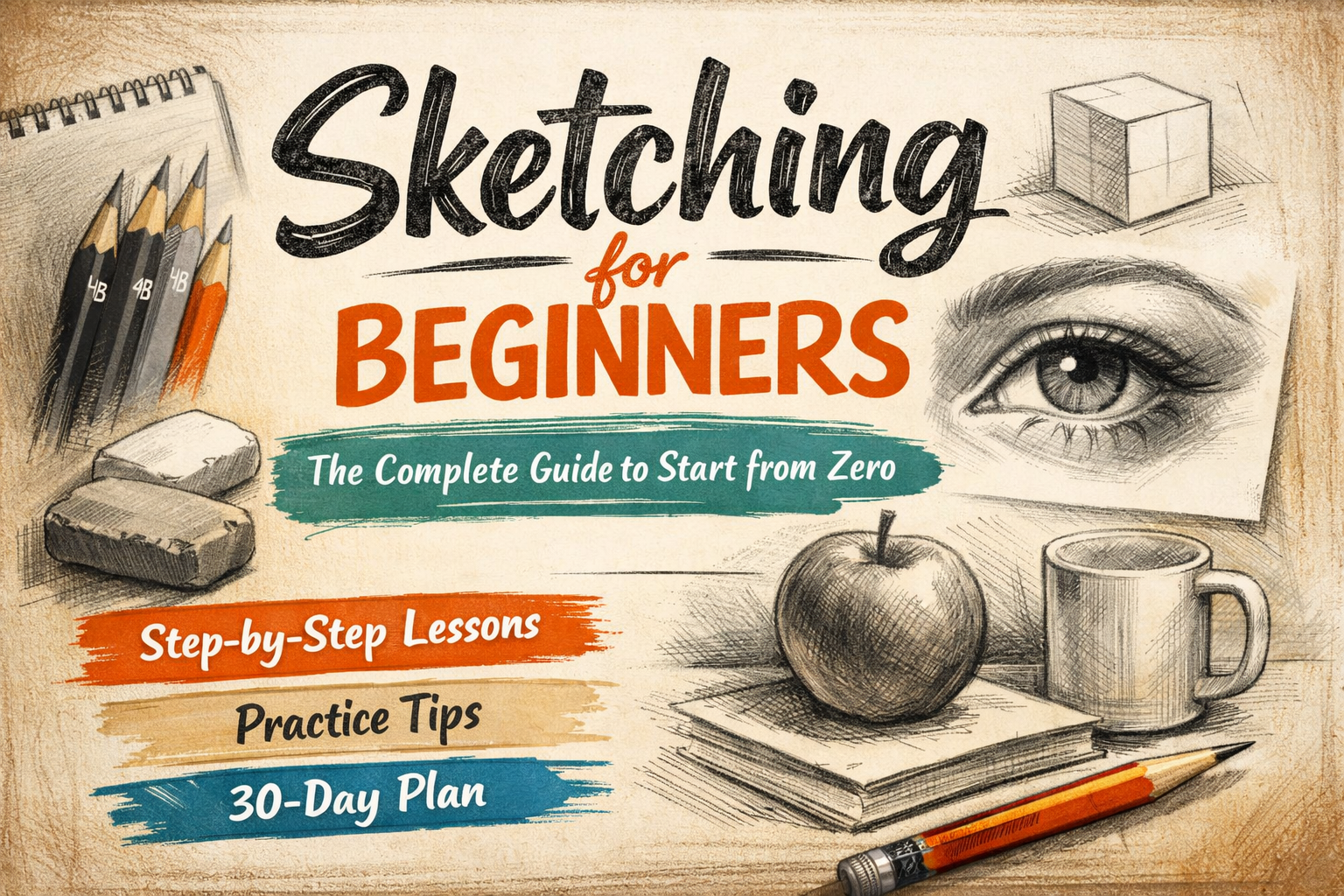
Sketching for Beginners: The Complete Guide to Start from Zero
Introduction, Can Anyone Learn Sketching from Zero?
If you’ve ever looked at a drawing and thought, “I wish I could do that,” you’re not alone. Almost every beginner starts with the same belief, that drawing is a talent you’re either born with or not. This mindset stops many people before they even begin. The truth, however, is much simpler and far more encouraging. Sketching is a skill, and like any skill, it can be learned from scratch with the right approach and consistent practice.
You don’t need expensive tools, years of training, or natural talent to start. All you need is a pencil, some paper, and the willingness to practice regularly. This guide is designed specifically for absolute beginners who are starting from zero. Whether you’ve never drawn before or you’re restarting after a long break, this article will walk you through everything step by step in a way that is easy to follow and actually works.
By the end, you’ll understand how to begin, what to practice, and how to improve without feeling overwhelmed.
What You Need to Start Sketching, Keep It Simple
One of the biggest mistakes beginners make is overcomplicating the process before even starting. They spend too much time researching tools instead of actually drawing. The reality is, you only need a few basic supplies to begin your sketching journey.
A simple HB pencil is enough to start, but if you want more control over shading, you can also use 2B and 4B pencils. These allow you to create both light and dark tones easily. An eraser is essential, and while a regular eraser works fine, a kneaded eraser can be helpful for soft corrections and lifting graphite gently.
For paper, you don’t need anything fancy. A basic notebook or drawing pad is perfectly fine. The goal in the beginning is practice, not perfection. Optional tools like blending stumps or sketchbooks can be useful later, but they are not necessary when you’re just starting out.
The most important thing to remember is this, your skill matters more than your tools. Focus on improving your technique rather than collecting supplies.
Understanding the Basics, Everything Starts with Simple Shapes
Before you jump into drawing complex subjects like faces or characters, you need to understand one fundamental concept. Everything you see around you can be broken down into simple shapes. This is the foundation of all drawing.
A cup can be seen as a cylinder. A face can be simplified into circles and ovals. A book is essentially a rectangular box. When you train your eye to see these basic forms, drawing becomes much easier and less intimidating.
Start by practicing circles, squares, triangles, and cylinders. Don’t worry about making them perfect. The goal is to train your hand and improve your control. Over time, your shapes will become more accurate, and this will directly improve your sketches.
This step may feel boring, but it is one of the most important parts of learning to draw. Skipping it will only make things harder later.
Building Control, Why Lines Matter More Than You Think
Once you are comfortable with basic shapes, the next step is improving your line control. Many beginners struggle because their lines are shaky or inconsistent. This is completely normal, and it improves with practice.
Spend time drawing straight lines, curved lines, and light strokes. Try drawing lines in one smooth motion instead of sketching over them repeatedly. This helps build confidence and control in your hand.
Another important tip is to avoid pressing too hard on the paper. Light strokes allow you to correct mistakes easily and create cleaner sketches. As your confidence grows, your lines will naturally become more precise.
Think of this stage as training your hand. Just like any physical skill, it takes repetition to improve.
Start Small, Drawing Simple Objects First
Many beginners make the mistake of trying to draw complicated subjects too early. This often leads to frustration and discouragement. Instead, start with simple objects that you can easily observe.
Look around your room and pick something basic, like a cup, a fruit, or a book. Observe its shape, proportions, and details. Then try to recreate it on paper by breaking it down into simple forms first.
This practice helps you develop observational skills, which are essential for drawing. Instead of guessing what something looks like, you learn to actually see it.
Over time, you will notice that your drawings start to look more accurate and realistic. This is because you are training both your eyes and your hand to work together.
Understanding Light and Shadow, Bringing Your Sketch to Life
One of the biggest differences between a flat drawing and a realistic sketch is shading. Light and shadow give your drawing depth and dimension, making it look more three-dimensional.
Start by identifying a light source. This could be a lamp, sunlight, or any consistent source of light. Notice where the light hits the object and where the shadows fall. The side facing the light will be brighter, while the opposite side will be darker.
Practice basic shading techniques like light strokes, layering, and blending. Don’t rush this process. Shading takes time to master, but even simple shading can make a big difference in your drawings.
As you improve, you will start to understand how to create depth and contrast, which are key elements of good sketching.
A Simple 30-Day Practice Plan for Beginners
Consistency is more important than intensity when it comes to learning sketching. You don’t need to practice for hours every day. Even 20 to 30 minutes daily can lead to significant improvement over time.
In the first week, focus on basic shapes and line practice. This builds your foundation. In the second week, start drawing simple objects using those shapes. In the third week, introduce shading and experiment with light and shadow. By the fourth week, combine everything you’ve learned to create complete sketches.
If you follow this routine consistently, you will notice visible improvement within just 30 days. The key is to show up every day, even if you don’t feel motivated.
Common Mistakes Beginners Make, And How to Avoid Them
Every beginner makes mistakes, and that’s part of the learning process. However, being aware of these mistakes can help you improve faster.
One common mistake is drawing too quickly. Good sketching requires patience and observation. Another mistake is ignoring basic shapes and jumping straight into details. This often leads to incorrect proportions.
Pressing too hard with the pencil is another issue. It makes your drawing harder to fix and can damage the paper. Finally, many beginners compare their work to experienced artists, which can be discouraging. Remember, every expert was once a beginner.
Focus on your own progress and improvement instead of comparing yourself to others.
How Long Does It Take to Get Good at Sketching
This is one of the most common questions beginners ask, and the answer depends on your consistency and practice.
If you practice regularly, you can see noticeable improvement within the first 30 days. After about three months, you will have a solid understanding of the basics. With six months to a year of consistent practice, you can develop strong sketching skills.
The important thing to understand is that progress is gradual. You won’t become great overnight, but every small improvement adds up over time.
Pro Tips to Improve Faster
If you want to speed up your progress, there are a few simple strategies you can follow. First, practice daily, even if it’s just for a short time. Consistency is more important than long sessions.
Second, use references instead of drawing from memory. This helps you understand shapes, proportions, and details more accurately. Third, study other artists and observe their techniques. This can give you new ideas and improve your understanding.
Finally, focus on fundamentals before trying advanced techniques. A strong foundation makes everything else easier.
Conclusion, Start Your Sketching Journey Today
Starting something new can feel intimidating, especially when you’re beginning from zero. But every artist you admire once stood exactly where you are now. The difference is, they started and kept going.
Sketching is not about talent, it’s about practice, patience, and persistence. The more you draw, the better you will become. It’s as simple as that.
So pick up your pencil today and start your first sketch. It doesn’t have to be perfect. What matters is that you begin.
Your journey as an artist starts with a single line.
Artistry
Explore unique sketches and artistic creations today.
Inspiration
Creativity
info@theinkvista.in
© 2025. All rights reserved.