Start Sketching: A Beginner's Guide to Drawing
Discover how to start sketching from scratch with our complete beginner's guide. Learn simple tips, a daily practice routine, light and shadow basics, and common mistakes to avoid, perfect for aspiring artists.
Black Heart
1/30/20263 min read
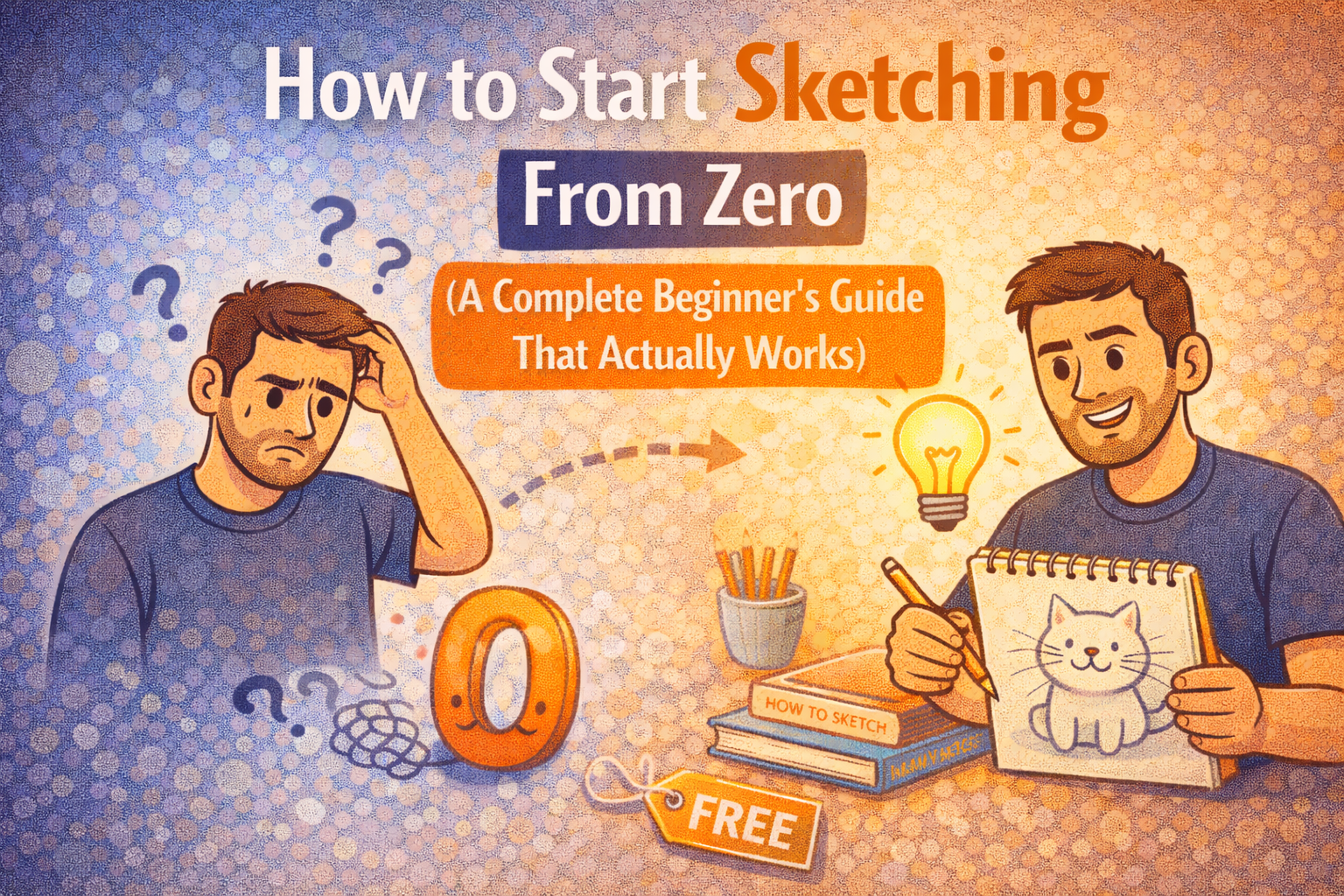
How to Start Sketching From Zero (A Complete Beginner’s Guide That Actually Works)
If you’ve ever searched “how to start sketching” or “I want to draw but don’t know where to begin”, you’re not alone.
Most beginners quit sketching not because they lack talent, but because they start the wrong way.
I started sketching with no plan, no guidance, and no idea what I was doing. Over time, through mistakes, breaks, and trial and error, I learned what actually matters for beginners.
This guide is written only for complete beginners.
No complex art terms.
No unrealistic advice.
Just a clear, practical path to start sketching from zero, and stick with it.
Why Most Beginners Fail at Sketching
Before we talk about how to start, let’s talk about why most people stop.
Beginners usually fail because:
they try to draw perfect art too early
they compare themselves to advanced artists
they overthink tools and techniques
they expect fast results
they don’t know what to practice
Sketching is a skill, not a talent test.
Once you understand that, everything becomes easier.
What Sketching Really Is (Most Beginners Get This Wrong)
Sketching is not about making finished artwork.
Sketching is:
thinking on paper
training your hand and eyes
learning observation
understanding shapes, light, and form
A sketch is allowed to be messy.
In fact, messy sketches are a sign you’re learning.
Step 1: Forget Drawing “Beautiful” Things
As a beginner, your goal is not beauty.
Your goal is understanding.
Instead of trying to draw faces, anime characters, or realistic portraits right away, start with:
cubes
spheres
cylinders
simple objects
These shapes teach you:
proportions
perspective
light and shadow
This foundation makes everything else easier later.
Step 2: Learn to See Before You Learn to Draw
Most beginners draw what they think they see.
Artists draw what they actually see.
To train this:
draw objects in front of you, not from memory
look more than you draw
notice angles, sizes, and distances
A simple exercise:
Place a cup on a table.
Don’t name it “cup” in your head.
See it as lines, curves, shadows, and shapes.
This single habit improves sketching faster than any tutorial.
Step 3: Use Light Lines Only
One of the biggest beginner mistakes is pressing the pencil too hard.
Hard pressure:
ruins paper
makes erasing messy
limits corrections
creates stiff drawings
Professional artists sketch lightly first, then slowly build confidence.
Draw like you’re testing the paper, not carving into it.
Step 4: Understand Light and Shadow Early
You don’t need anatomy or perspective yet.
You do need light and shadow.
Learn these basics:
light hits one side
shadow forms on the opposite side
shadows are soft, not sharp
darker does not mean black
Even a simple ball can look realistic with correct shading.
Light and shadow make drawings look alive.
Step 5: Stop Using Your Finger for Shading
Beginners often blend with fingers.
This causes:
oily paper
muddy tones
loss of control
Use anything else:
tissue
cloth
cotton
brush
Clean blending instantly improves sketch quality.
Step 6: Practice for 10 Minutes, Not 2 Hours
The best sketching habit is short and consistent practice.
Ten minutes a day is enough.
In 10 minutes, you can:
draw basic shapes
practice shading
sketch your hand
draw a simple object
Consistency matters more than duration.
Most artists improve because they draw often, not because they draw long.
Step 7: Stop Erasing Everything
Erasers are tools, not weapons.
Don’t erase every wrong line.
Instead:
leave mistakes
draw over them
adjust slowly
Mistakes teach you proportions and control.
Sketching is thinking out loud on paper.
Step 8: Keep All Your Old Sketches
Never throw away old drawings.
Old sketches:
show progress
build confidence
remind you how far you’ve come
One day, you’ll look back and realize you are improving, even when you thought you weren’t.
Step 9: Avoid Comparing Your Art to Social Media
Online artists:
show finished work
hide failed sketches
have years of experience
Comparing your beginning to someone’s middle kills motivation.
Compare yourself only to your past drawings.
Step 10: Sketching Is a Skill, Not an Identity Test
You don’t need to decide:
“Am I an artist or not?”
You just need to sketch.
Art identity forms naturally through practice.
The moment you stop judging yourself, you start improving faster.
A Simple Beginner Sketching Routine
Here’s a routine anyone can follow:
Daily (10–15 minutes):
5 minutes → shapes or lines
5 minutes → object sketch
5 minutes → shading practice
That’s it.
No pressure.
No perfection.
Just progress.
Common Beginner Questions
Can anyone learn sketching?
Yes. Sketching is a learned skill, not a talent.
How long does it take to get good at drawing?
You’ll see improvement in weeks, not years, if you practice consistently.
Do I need expensive tools to start sketching?
No. Skill matters more than tools for beginners.
Is it okay if my sketches look bad?
Yes. Bad sketches mean learning is happening.
Final Thoughts
Sketching isn’t about being gifted.
It’s about being patient.
If you start today, stay consistent, and allow yourself to be bad at first, you will improve , guaranteed.
Every artist you admire once drew terrible sketches.
The only difference?
They didn’t quit.
Artistry
Explore unique sketches and artistic creations today.
Inspiration
Creativity
info@theinkvista.in
© 2025. All rights reserved.